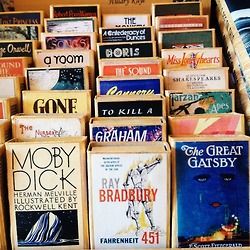
Showing posts with label bookish. Show all posts

Thursday, February 25, 2021

Sir Gawain and 10th Grade Boys

 "Never forget that you're teaching the students, not the subject."

I'd heard teachers say this my whole life and mentally assented, but now, after several years in the classroom, I get it in a whole different way. 

In my current job, I teach three rounds of the exact same lesson plan each day. As much as I may love my material (and I do love a lot of it), even I can admit that it could get boring fast, especially the third time around. 

But it doesn't, because even though the material is familiar to me, it's always new to my students. And I can never know for sure how they will respond. Sure, I can predict and prepare and attempt to lead them to a particular response to the subject. I can generally predict which students will make profound comments, connections that I might not even have thought of. But when it all comes down to it, I don't know what any of my students will say when they raise their hand and I call on them. Sometimes we will be in the middle of a great and (I think) captivating discussion. I'll call on an astute student who's had his hand up, and instead of making an insightful comment, he'll ask to go to the bathroom. Other times, the students who usually spout banalities will actually have something really interesting to contribute. I truly never know what to expect - and that's what keeps this interesting. 

In 10th grade Medieval Literature, we started the semester off with Sir Gawain and the Green Knight, which is such a fun book to teach. It includes elements of the eerie and supernatural (one of the first scenes is a giant green knight getting beheaded, picking his head up off the floor, issuing a challenge to his assailant, and galloping from the scene on a green horse). But it also includes a lot of questions about reputation vs. character, best intentions vs. actions, obvious temptation that we avoid and insidious temptation that hamstrings us before we know what's happened. 

The central episode of the book involves Sir Gawain, our hero, visiting a castle and being accosted early in the morning on three successive days by the wife of his host. She is ravishingly beautiful, skimpily dressed, and very obviously throwing herself at Gawain, who has to walk a fine line between maintaining his virtue and not offending his host and hostess in a very remote location. 

This is a fun lesson to teach. 

I usually start off by sitting on some poor 10th grade boy's desk and getting a little too close for his comfort - just close enough to make him uncomfortable and to make his classmates laugh, but nothing inappropriate. I then remind them that this discomfort is NOTHING compared to what Gawain is facing, in his bed in his skivvies early in the morning with his ravishingly beautiful married hostess almost literally pinning him down so he can't just run. 

Then I ask them what they would do if they were Sir Gawain. 

"Remind her politely that she's already married." (He tried that and it didn't work.)

"Politely ask her to leave, and if she doesn't, firmly assist her from the room." (That would be great, but he's not decently attired, which makes this a complicated endeavor.)

"Wrap the sheet around himself and run!" (Like Joseph with Potiphar's wife. Oh wait, five of my students don't know this story. We can't have that. Brief segue to recap the story of Joseph and Potiphar's wife.)

In my third class of the day, with my supervisor in the room for my formal observation, one of the students I enjoy the most for his confidence and engagement and complete unpredictability, stands up, shrugs his shoulders, grins (I know it's impish, even beneath the mask), and says "I mean...well..."

I prompt him to use his words please. 

"Well...I mean..." he shrugs again, "I'd probably just go with the flow." 

"Go with the flow how? Like Gawain did? Walking the line between courteousness and virtue and somehow pulling it off?"

He shrugs and grins again. "I mean...well...it's consent..."

Split second of silence, and then I hear a short burst of laughter from my supervisor. Bless her - she's taught high schoolers for years and raised three of them - nothing takes her by surprise. Then the class is metaphorically in an uproar. Laughing, incredulous, sheepishly agreeing, attacking the spokesperson, who can totally handle it. 

I'm laughing too, rolling my eyes, and thanking the Lord for the opportunity to engage with these crazy, dear, thoughtful teenagers. This is my kind of conversation. 

"Ok...well, by our culture's standards, unfortunately, that's all that's required to make this acceptable. But what's wrong with this?"

Classmates chime in.

"She's married!"

So?

"It's against the code of chivalry!"

"It could hurt Gawain on his quest!"

"Rumors could spread and ruin his reputation!"

I nod, affirm the answers, and ask, "What else?"

Crickets. 

"Y'all. Chivalry is a cultural code that we left behind hundreds of years ago. If this were just about violating the code of chivalry, then if Gawain lived today, it would be totally acceptable for him to "go with the flow." After all, in our culture, consenting adults basically get to do whatever they want. But culture doesn't determine morality. God does. And God says over and over again throughout the Bible that adultery is wrong. Period. That's what's so dangerous about this situation. The Lady isn't just tempting him to violate a cultural code; she's tempting him to violate the law of God."

They have quieted down now, and they're listening. But I can see that they still think this is just about Gawain and a lady in some long-ago, far away castle. 

So I tell them, "Y'all. This is about us. You might never have thought about this, but I'll tell you straight: many of the people I respect most in the world have been 'propositioned' at some point in their lives. And they had to decide how to respond. Were they going to slip into that sin and excuse it, or were they going to stay committed to their morals? We're all going to face times like this, and it might not be nearly as obvious as the Lady was."

Now I have their complete attention. I can see them processing. Thinking. This was an unexpected turn. So I let it sink in, and then I move on to the next part of the lesson. 

I don't teach the subject. I teach the students. I truly never know what my students will say, or what avenue of conversation will open up on any given day. 

In the world of literature, we talk often about the idea of cultivating a moral imagination. It's the idea that moral formation is about so much more than a list of do's and don'ts. It's about helping students imagine what it would be like to be in morally complicated situations, and then giving them the opportunities to see how protagonists respond to those situations. Sometimes the protagonists do the right thing; sometimes they don't. Either way, it gives the students a safe space to think through the ramifications of different responses to different kinds of situations. Then, hopefully, that will cultivate their ability and desire to act rightly in their own lives. Will any of my students be accosted in a castle by a ravishingly beautiful medieval woman? Nope. But might they face situations at college parties or later in life that are equally morally compromising? Yep. And my hope is that this conversation will stick for some of my students, and that when they end up in those situations, they will remember not only the biblical commandments about sexual purity, but also the example of people like Sir Gawain, who remained steadfast in a very sticky situation.

But the beautiful thing about Sir Gawain and the Green Knight is that while it's about moral fortitude, it also deals with moral failure. Gawain stays faithful when up against the Lady's temptation, but he falls in another way later in the book. He is crushed. But rather than staying crushed, he humbles himself, admits his mistake, and vows to always wear a memento of his sin to keep him humble. Gawain went on to accomplish many daring feats and adventures, but rather than getting puffed up by pride, he remembered his human frailty and depended on the character of his Savior rather than his own gleaming reputation. That, too, is something I hope my students will remember when they fail. I hope they will confess, repent, remember, and move forward to do great things in the grace of God. 

Thursday, June 25, 2020

My Soul Shelf: A Tribute

The professor that had the most impact on my faith and vocation is a dynamite American lit professor named Christina Bieber Lake. I could rave endlessly about how the way she teaches and lives shaped me, but that's not the purpose of this post. Suffice it to say that when I saw this scrawled on a bulletin board in a dorm my junior year I thought that the Bieber was referring to Dr. Bieber, as her students call her. 


Alas - most people are as untouched by her influence as I am untouched by the Justin Bieber fandom. Their loss. One of my best friends and I have declared that Dr. Bieber and Dr. Mazzarella (one of the other professors in the English department) are our spirit animals and we will be a dynamic duo like them when we grow up and achieve our professorial dreams. 

Anyway. Dr. Bieber wrote a book that just came out this month: The Flourishing Teacher: Vocational Renewal for a Sacred Profession. I preordered it, squealed when it arrived in the mail, and read it in four days. It's a mix of wit and wisdom - practical and spiritual - for the teaching life. Though, to be honest, I would give it to just about anybody because it's basically just a good perspective on life in general. I laughed and nodded and underlined and cried and wrote notes in the margins that only I or friends who actually took her classes would understand. 

That was the huge gift of this book - I got to see how Dr. Bieber approaches teaching very deliberately and that the impact that she had on me and my friends was not by chance. I got to marvel anew at the privilege I had of sitting under her as a college student - and of being able to learn from her again as a new teacher, since she is one of the main reasons I figured out I was supposed to teach in the first place.

One of the many life-giving tips Dr. Bieber gives in her book is to build what she calls a soul shelf - a shelf of the books that you can always count on to rejuvenate, inspire, and give your soul rest.

Being the good student that I am (and also being someone who never needs to be told twice to rearrange a bookshelf as a good pastime), I went and built my soul shelf this afternoon. It only took me about 10 minutes, because I know the books that speak to me like that - I just had to collect them on one shelf.  It makes me happy just looking at it. 

Dr. Bieber ordered her soul shelf according to three categories:

Beauty -"What makes me remember that my life here is a gift of immeasurable beauty?"

Simplicity - "What helps me recognize that it is possible to live in the present moment in peace and the fullness of joy?"

Love - "What inspires me to come out of myself and cultivate a healthy love for others?"

Now. These are lovely and very helpful categories. I fully intended to order this list according to them as a handy reference for anyone who stumbles across it. However. Most of the books on my soul shelf fall into at least two of them, and there are many that belong in all three categories.

So here they are. In an order that makes sense to me. Some of them are already on The Bookshelf, while others are new to me in the two years since I created that list. I'll add those to The Bookshelf soon.

BEAUTY * SIMPLICITY * LOVE

A Book of Luminous Things: An International Anthology of Poetry, edited by Czeslaw Milosz - 
I found this at a used bookstore in January and bought it because I loved the title, I know Milosz, and most of the poets were unfamiliar to me (highly unusual when I pick up a poetry anthology), and most of them did not originally write in English. This book is truly luminous. I read it from cover to cover, which is actually unusual for me when it comes to poetry anthologies. In case you're curious, and these names mean something to you, some poets included who I was previously familiar with are Denise Levertov, Mary Oliver, Walt Whitman, Raymond Carver, and Robert Frost.

Milosz says this in the introduction to one section:

Epiphany is an unveiling of reality. What in Greek was called epiphaneia meant the appearance, the arrival, of a divinity among mortals or its recognition under a familiar shape of man or woman. Epiphany thus interrupts the everyday flow of time and enters as one privileged moment when we intuitively grasp a deeper, more essential reality hidden in things or persons. 

A Thousand Mornings, by Mary Oliver 
 - This is the only volume of Oliver's poetry that I own (hopefully that will change soon), but it's a good one. Her poems are exquisite, humorous, and bracing by turns. I am always refreshed when I turn to them.

The Stream and the Sapphire, by Denise Levertov 
- I actually first encountered Levertov through Dr. Bieber, who gave me this slim little volume when I graduated. This is a collection of her poetry engaging with ideas of faith. I particularly love "Annunciation," which is too long to include here, and "Avowal":

As swimmers dare
to lie face to the sky
and water bears them,
as hawks rest upon air
and air sustains them,
so would I learn to attain
freefall, and float
into Creator Spirit's deep embrace,
knowing no effort earns that all-surrounding grace.

Come and Eat, by Bri McKoy - I wrote about this book in this post. Bri winsomely and with great joy makes the case that if we want to share the love of Jesus with the world, we need to start by inviting others to share meals at our tables.

"Too often I notice how I can become hardened by the seemingly insurmountable evil in this world. But here's the thing: we know who ultimately wins the battle. We know our Rescuer's name. He is not calling us to rescue anyone; he is calling us to pull out a chair and sit amongst the broken. He is the Rescuer. We are simply an extension of his great love and peace. And he calls us to continue stepping into brokenness and gives us the strength to face the unimaginable under the banner of his love. So we must show up."

Adorning the Dark, by Andrew Peterson - This book. It's a Christian creative manifesto. Peterson started the Rabbit Room, a collective of Christian creatives inspired by the Inklings and Wendell Berry, among others. I underlined and starred and annotated the heck out of this book.

"Righteousness means more than pious obedience; it means letting a strong, humble mercy mark your path, even when - especially when - you don't know where it is taking you. . .Your heart is so full it must be must be poured out. You see the world as a dark, messy place that needs rearranging, and with all that light shooting out of your pores your just the person to do it."

The Hiding Place, by Corrie Ten Boom – every Christian should read this at some point. As much the story of a family living faithfully in ordinary life as the story of how they handled the extraordinary circumstances of occupied Holland in WWII. 

“When He tells us to love our enemies He gives, along with the command, the love itself.” 

A Circle of Quiet, by Madeline L’Engle – lyrical memoir by the author of A Wrinkle in Time about faith, life, and creativity.

“An infinite question is often destroyed by finite answers...To define everything is to annihilate much that gives us laughter and joy.”

Quotidian Mysteries: Laundry, Liturgy, and Women’s Work by Kathleen Norris - very short, practically a pamphlet, on how important small, ordinary things are in developing the rhythms of life that give us space to walk with God. Dr. Bieber assigned it in the first class I took with her. 

“The ordinary activities I find most compatible with contemplation are walking, baking bread, and doing laundry. ” 

“My goal is to allow readers their own experience of whatever discovery I have made, so that it feels new to them, but also familiar, in that it is a piece with their own experience. It is a form of serious play.” 

One Thousand Gifts, by Ann Voskamp – beautifully crafted piece about gratitude, trust, faith, and living in the present. A long-time favorite of mine. 

“...the secret to joy is to keep seeking God where we doubt He is.” 

“A life contemplating the blessings of Christ becomes a life acting the love of Christ.”

Surprised by Oxford, by Carolyn Weber – riffing off Surprised by Joy, the author’s story of questioning and faith during her time as a masters’ student in Literature at Oxford University. Oozing with literary references and a delightful read. 

“He quickened his stride: 'The truth is in the paradox, Miss Drake. Anything not done in submission to God, anything not done to the glory of God, is doomed to failure, frailty, and futility. This is the unholy trinity we humans fear most. And we should, for we entertain it all the time at the pain and expense of not knowing the real one.” 

The Chronicles of Narnia
, by C.S. Lewis - beautiful, funny, poignant, and quick to read, these books provide better imaginative and intuitively graspable illustrations of the life of faith than a lot of theology I've read. (Which is why they so often crop up in sermon illustrations.) And they are simply good stories. The world is a different place with the Pevensie children and the people of Narnia in it. 

The Lord of the Rings, by J.R.R. Tolkien - I reread this trilogy every few years, and it gets better every time. Tolkien creates a world where evil is so palpable and powerful that there is only the slightest thread of irrational hope that good will win. The journey of the members of the unlikely fellowship to overcome evil and restore good is moving, funny, imaginative, and profound. It is a reminder that courage and beauty and hope and friendship can be found in the most unlikely of places - even when the forces of evil seem insurmountable. 

"There's some good in this world, Mr. Frodo, and it's worth fighting for."

(To be completely honest, I'm not 100% sure if the above quote is from the book or the movie, but it's a great quote all the same.)

The Tale of Desperaux, by Kate DiCamello – I love this book about a very small mouse with very large ears, a kingdom in desperate need of soup, and a princess named Pea. Is it choice or lineage that makes someone what they are?

“Once upon a time," he said out loud to the darkness. He said these words because they were the best, the most powerful words that he knew and just the saying of them comforted him.” 

Les Miserables, by Victor Hugo – this book. Detective story, redemption story, love story, revolution story, with a good dose of random background information on the battle of Waterloo, the sewers of Paris, street slang, and obscure convents thrown in. Stunning on every level. 

“A garden to walk in and immensity to dream in--what more could he ask? A few flowers at his feet and above him the stars.” 

To Kill a Mockingbird, by Harper Lee – a classic for a reason. It’s so much more than a story of racial injustice in the Jim Crowe South. It’s a story about childhood and growing up, family, community, and walking around in someone else’s shoes. And who doesn’t love Scout Finch?

“Until I feared I would lose it, I never loved to read. One does not love breathing.”

Till We Have Faces, by C.S. Lewis – widely considered to be Lewis' best fictional work, this one blows my mind every time I read it. Reimagining of the myth of Cupid and Psyche, with profound things to say about love, integrity, the longing for home, and knowing oneself.

“The sweetest thing in all my life has been the longing — to reach the Mountain, to find the place where all the beauty came from — my country, the place where I ought to have been born. Do you think it all meant nothing, all the longing? The longing for home? For indeed it now feels not like going, but like going back.” 

Jayber Crow, by Wendell Berry - This novel is the ruminations of a man who didn't go many places or do much, but who led a whole, good life. It's a book about inward change even when externals haven't changed much. It's like the river which plays a prominent role in the story: it doesn't go anywhere, but it's always changing. It's a book about calling, about valuing what is, about quiet doubts and quiet faith, with a lot of dry humor thrown in. It's about letting go of the need to "make something of yourself."

"You have been given questions to which you cannot be given answers. You will have to live them out - perhaps a little at a time."

"Faith is not necessarily, or not soon, a resting place. Faith puts you out on a wide river in a little boat, in the fog, in the dark. Even a man of faith knows that (as Burley Coulter used to say) we've all got to go through enough to kill us."

Gilead, by Marilynne Robinson – a stunningly beautiful book. One of my top 5 favorite books ever. A letter from a dying father to his young son, it’s a meditation on grace, fathers and sons, forgiveness, faith, and the beauty of this earthly life. People tend to either absolutely love it (that’s me) or be bored to tears because not a ton happens. I love the sequel, Home, too (it’s a kind of prodigal son retelling), but I may just be partial because it touches on themes near and dear to me. 

“This is an interesting planet. It deserves all the attention you can give it.

The Elegance of a Hedgehog, by Muriel Barbery – pensive, funny, mildly crass and decidedly European book about a concierge in Paris who is actually a brilliant autodidact. A treasury of small and beautiful things. Originally written in French.

“When tea becomes ritual, it takes its place at the heart of our ability to see greatness in small things. Where is beauty to be found? In great things that, like everything else, are doomed to die, or in small things that aspire to nothing, yet know how to set a jewel of infinity in a single moment?” 

Little, Big, by John Crowley – I read this for a Christianity and Fantasy class in college, and I’m not sure whether I would have fallen in love with it as much as I did if I hadn’t had the guidance of a fabulous professor. That said, the poetry of the dense prose, the multigenerational narrative, the themes of faith, doubt, love, longing, home, and narrative make this a fantasy I’m confident I’ll return to throughout the years. Be alert to skip some bedroom scenes.

“The further in you go, the bigger it gets.”

East of Eden, by John Steinbeck – extremely dark at times but also at times exquisite, this book is well worth the 600 pages. Set in California around the turn of the 20th century, it’s a multi-generational story about individual choice, the consequences of familial love and lack thereof, and asking questions about what determines someone’s character. I love this book for the secondary characters. Like Les Mis, exceptionally well-done on every level. Lyrical description, powerful exploration of themes, excellent characterization. 


“I believe that there is one story in the world, and only one. . . . Humans are caught—in their lives, in their thoughts, in their hungers and ambitions, in their avarice and cruelty, and in their kindness and generosity too—in a net of good and evil. . . . There is no other story. A man, after he has brushed off the dust and chips of his life, will have left only the hard, clean questions: Was it good or was it evil? Have I done well—or ill?”

Sunday, March 24, 2019

Living by Prayer

from The Valley of Vision

O God of the open ear,
Teach me to live by prayer as well as by providence,
    for myself, soul, body, children, family, church;
Give me a heart frameable to thy will;
    so might I live in prayer, and honour thee,
        being kept from evil, known and unknown.
Help me to see the sin that accompanies all I do,
    and the good I can distill from everything.
Let me know that the work of prayer is to bring my will to thine,
    and that without this it is folly to pray;
When I try to bring thy will to mine it is to command Christ,
    to be above him, and wiser than he:
    this is my sin and pride.
I can only succeed when I pray
    according to thy precept and promise,
    and to be done with a it pleases thee,
    according to thy sovereign will.
When thou commandest me to pray for pardon, peace, brokenness,
    it is because thou wilt give me the thing promised,
        for thy glory, as well as for my good.
Help me not only to desire small things
    but with holy boldness to desire great things
        for thy people, for myself,
            that they and I might live to show thy glory.
Teach me that it is wisdom for me to pray for all I have,
                       out of love, willingly, not of necessity;
                  that I may come to thee at any time,
                      to lay open my needs acceptably to thee;
                  that my great sin lies in my not keeping
                      the savour of thy ways;
                  that the remembrance of this truth is one way
                      to the sense of thy presence;
                  that there is no wrath like the wrath of being governed
                      by my own lusts for my own ends.

Wednesday, July 25, 2018

Additions to the Bookshelf | No. 1


via Pinterest
Now that I've got the bookshelf up and running, it's time to start the practice of regularly sharing what I've been reading. (I'm so excited for this.) Here's what I've been reading since setting up the bookshelf in May. These titles are also going up on the permanent page for ease of access.

Third Culture Kids 3rd Edition: Growing Up Among Worlds, by David C. Pollock, Ruth E. Van Reken, and Michael V. Pollock - This book is the seminal work on TCKs. Cathartic, insightful, wise, thought-provoking. I'm going to be mulling over this book for a very long time. If you are a TCK or are closely connected to one, this is a must-read. 

A childhood lived in, among, and between various cultural worlds is indeed becoming the norm rather than the exception. 

While parents may change careers and become former international businesspeople, former missionaries, former military personnel, or former foreign service officers, no one is ever a former third culture kid. TCKs simply move on to being adult third culture kids because their lives grow out of the roots planted in and watered by the third culture experience.

Grief is an affirmation of the good, not a negation. We don't grieve for the loss of things, places, events, and relationships we don't care about or love. Again, it doesn't mean there are not good days and wonderful new things, places, events, and relationships ahead. It means that something precious has been lost and there needs to be a time to mourn that loss in order to move on more fully to the good of the present. 

Jane Eyre, by Charlotte Bronte - I've read this four times and it gets richer every time. (This time around I read it for my Skype book club, and the discussion should be interesting in light of Wide Sargasso Sea.) I am in awe of Jane herself - her moral courage, her capacity for love, her independent spirit, and her faith. This time around I particularly enjoyed all the references to faerie - this book taps into folklore and fairytale on so many levels and I love it. 

Laws and principles are not for the times when there is no temptation: they are for such moments as this, when body and soul rise in mutiny against their rigor . . . If at my convenience I might break them, what would be their worth?

The Dutchess of Bloomsbury Street, by Helene Hanff - Funny, short, and poignant, with lots of reflections on literature, England, and the contrasts between London and NYC. 

Somewhere along the way I came upon a mews with a small sign on the entrance gate addressed to the passing world. The sign orders flatly: 

COMMIT NO NUISANCE 

The more you stare at that, the more territory it covers. From dirtying the streets to housebreaking to invading Viet Nam, that covers all the territory there is.


Ballet Shoes, by Noel Streatfeild: Sweet book that to be perfectly honest I read because Kathleen Kelly recommends it in You've Got Mail. I picked up my copy at the books market on the South Bank of the Thames in London, and it smells wonderful. In the vein of Swallows & Amazons, The Railway Children, and All-of-a-Kind Family. Didn't love the ending, though.

The Fossil sisters lived in the Cromwell Road. At that end of it which is farthest away from the Brompton Road, and yet sufficiently near it to be taken to look at the dolls' houses in the Victoria and Albert every wet day, and if not too wet, expected to "save the penny and walk". 

Saving the penny and walking was a great feature of their lives.

via Pinterest
A Gentleman in Moscow, by Amor Towles - the same mastery of language, observation, and characterization found in Rules of Civility, with a very different feel. Count Alexander Ilyich Rostov spends most of his life under house arrest in a hotel in Moscow, but as the years pass his world expands rather than becoming confining. Food, friendship, fun and games - and a tumultuous era in Russia. Somewhat slow at parts, but immensely satisfying climax. Points for Casablanca references and an engaging child with a penchant for yellow.

"How do you spend your time?"
"Dining, discussing. Reading, reflecting. The usual rigmarole."

The Virgin of Bennington, by Kathleen Norris - I expected this to be a memoir, which it is in part, but it's more a tribute to Betty Kray, Norris' mentor and a hugely influential figure (though often unrecognized) in American poetry from the 1930s-1980s. Far more than an arts administrator, Kray was a hard sense businesswoman, brilliant instigator, builder of companies (in the Fellowship of the Ring sense of the word), and compassionate and beloved mentor to some of the most influential American poets of the 20th century. I found a new mentor in the pages of this book.

I had learned from Betty that being upset was not my job. Nor was I to judge. If a poet was so nervous that she showed up drunk for a reading, all I could do was try to bring the program off as well as I could. And if that failed, I might at least get some food into her before I sent her on her way.

Dakota: A Spiritual Geography, by Kathleen Norris - A bracing meditation centering around the sparse, harsh beauty of life on the Dakota plains. 

Disconnecting from change does not recapture the past. It loses the future.

I'm always eager to add new books to my TBR list: I'd love to hear what books you've been loving recently. Do share in the comments below!

Wednesday, May 16, 2018

New Feature: The Bookshelf


A year ago, as I was graduating from college, people kept pestering me for a list of books that I would recommend reading.

I really don’t like it when people ask for that kind of list.

When I recommend books, it’s not out of the blue. It’s in the context of specific conversations with specific people. There are books I am confident some of my friends would love that put others to sleep.

Gilead, for example.

It’s one of my top 5 favorite books. It is rich and beautiful and exquisitely written and conceived.

But there is very little plot.

So I know not to unreservedly recommend it to friends who really care about plot-driven novels.

My friend Eunice, for example, who loves Jurassic Park and spy thrillers, finds Gilead utterly boring.

She understands why I love it, and I understand why she doesn’t.

All of this to say: I don’t like handing out a list of books I recommend, since I recommend different books to different people.

But enough people kept asking that I finally sat down to write a simple list of books I’ve read and enjoyed. Title, then author. Next book.

I couldn’t do it.

There was no way I could hand out a list of titles and authors and be done with it. It drove me crazy that people would have no idea why I would recommend a particular book or have any frame of reference for whether they might enjoy it or not.

Something had to be done.

I annotated it.

The list stretched to five pages of over 40 titles, with comments for each of them. Some annotations were one line, others were more like a paragraph.

I felt almost guilty when I gave this list of books to the people who had asked for it. It seemed so over-the-top (annotations? really?). And long. Who needs to add 40 books to their to-be-read list in one fell swoop??

But over the past year several people have remarked how much they appreciated having it on hand. Furthermore, they say that the annotations have been a helpful tool, not superfluous.

Since then, I’ve read probably 50 more books. And I have things to say about most of them.

My friend Angela has been pestering me to post the original list or something akin to it as a permanent page on this blog. And when Angela tells me to do something, I try to make a point of doing it, because she gives excellent advice. 

As of today, that permanent page is up. Enjoy perusing! 

Tuesday, March 27, 2018

Parisian Vignettes


Notre-Dame's rose windows are exquisite, but the best part of the cathedral is the park behind it. 

We grab crepes at a nearby stand and then choose a bench in the sunshine.

There's good people-watching here.

A couple is taking bridal photos, the groom so happy that he could burst.

A family from Texas has three small boys and a toddler on a leash. The dad drops the leash to snap pictures of his family, and the toddler runs up to the camera to see the results. As the family moves on, the dad picks the leash back up. The toddler dashes off at high speed, is caught by the leash at the wrong angle, and topples over. It must be a fairly regular occurrence, because she picks herself up, unconcerned, and continues her exploration.

***

While Mom and Dad search the Left Bank for a cafe, I embark on the metro to Montmartre. One thing stands out instantly about the metro: there are stairs up, down, and all around, but no elevators or escalators that I can find. Not that I need them - I enjoy stairs - but it is a huge contrast to the handicapped-friendly transit system in Munich.

When I find the right train going the right way, I slip in. I assume that the jazzy music I hear is a recording, but then I realize that a saxophonist has carved out a pocket of space in the jam-packed car, and I enjoy his art until it's time to get off. 

When I disembark I am stunned by the crush of people. This hill was once a hot spot for famous artists and bohemians in Paris, and it seems that every tourist in the city has decided to check it out today. Souvenir shops line the cobbled streets, and I jostle through the crowd as I head toward Sacre Coeur, the church with a panoramic view of the city. 

I pass a square with rows and rows of street artists. Some of them are the usual tourist fare, but others are true artists. I saunter through, admiring their work and watching the portraitists, and then I head on my way.


I had planned to go into Sacre Coeur, but the line is so long that I give up the idea and simply enjoy the panorama. I can see Notre Dame, the Eiffel Tower, and streets crammed with quintessentially Parisian houses. 

I snap a picture of Paris's sinking house and move on.


Suddenly the streets are empty. All the tourists in Paris are congregated one block away, but here there is nothing but a blackbird singing, a gentleman bringing in his trash, and high school kids congregated on the steep steps that characterize Montmartre. 


It's just like any city: real people live here. For us it's an enchanting travel destination, and for them it's the daily life of home. 

As I head to another metro station, I am suddenly surrounded by fabric outlets. Wire baskets with scraps line storefronts, and inside I see bolt upon bolt of fabric. 

Montmartre is a hill of contrasts: tourist trap, residential retreat, fabric lovers' paradise.


***


***

At first I wonder if the cat on the easy chair is real - it is so still and undisturbed by the bookworms milling through the store. Then I notice the signs:

"Aggie the cat stayed up all night reading: please let her sleep now."

Aggie is real, all right, and her presence is the finishing touch to the whimsey and wonderfulness that is Shakespeare & Company, the famed English language bookstore on the Left Bank of the Seine, just across from Notre Dame.

The store (whose history is well worth reading in the link above) is open from 10 am to 10 pm, and when we arrive at dusk, there is an honest-to-goodness line out front. Mom says:

"Isn't it wonderful to live in a world where people are willing to stand in line to go to a bookstore?"

I am already happy to be standing in line, but when we are finally admitted to the store, I become just a little giddy.

Rooms that link to each other every-which-way are filled will floor-to-ceiling bookshelves, and books  overflow into stacks on the floor.

I wander in bliss.

Upstairs there are rooms filled with beautiful used books, seating, and the aforementioned cat. As I browse, I hear piano music. At first I assume that it's a CD, but when I hear Matt Redman's "10,000 Reasons," I go to investigate.

A little upright piano is squeezed into a nook, and one of my fellow customers is playing.

So I sing. Because that's the logical thing to do when you're in a bookstore on kilometer zero in Paris, France, and a stranger is playing "10,000 Reasons."

After all three verses and refrains, the pianist thanks me for singing, I thank him for playing, and I continue to browse. Eventually, I leave with my prize: A Gentleman in Moscow, stamped with the Shakespeare & Company stamp, slipped into a canvas Shakespeare & Company bag.


***
I step onto the bus and wordlessly hand the driver my fare.

He looks at me, smiling, and says, "I'd like a ticket, please."

It takes me a moment to realize that he's gently chiding me for treating him like a machine, not a human. 

Humbled, I ask for a ticket, and he teaches me to make the request in French: "Un billet s'il vous plait."

***


We are in the Musee D'Orsay, the world-class art museum housed in what was once a train station. I knew that I loved this museum, but I had forgotten how much. 

As we wander the impressionist exhibit, I mentally add up: I have seen paintings from this museum on loan in Chicago, Washington, D.C., Berlin, and Munich, and now I'm back at the Musee D'Orsay itself. Not too shabby.

This famous clock is one of the "most Instagrammable spots in Paris." While stylish people jockey to get the perfect Instagram shot, others snooze on a funky multi-person recliner. Who has their priorities right?


I find the Monet that I love and get Mom to snap a photo. A poster of it was prominently displayed in my college dorm rooms and apartments.


Art museums generally feel like home, and this one more than usual. 

I get distracted from the art by a tour of first-graders. They file into the room and then sit on the floor in front of a Renoir. Usually first-graders are wiggly, but these are captivated by their teacher, who is holding them enthralled with a story about the painting. He speaks quietly, but he holds their complete attention. I am impressed, and I wish that I could understand the story he's telling in French.

We take a break in the museum cafe. When the waiter appears with our hot chocolate, he apologizes: he has put so much whipped cream on top of the beverage that chocolate is spilling over the sides of the glasses. The hot chocolate hits the spot, as do the pastries that we ordered with it.


Dad quips that the statue behind me is putting on deodorant.

***
Art is everywhere in Paris. In churches and museums, on street corners, even on the tarp that conceals a construction site.


The city itself is a constantly-morphing piece of art. 

***

Wednesday, February 28, 2018

Things I Learned This Month | February 2018

Franz Marc | "Deer in the Snow II" | 1911

Greetings from Munich, where we are facing a Siberian cold front (literally)! I thought I was used to cold winters from four years in Chicago, but I've come to accept that I will never be used to sub-zero temperatures. It doesn't help that my apartment has insulation from decades ago, which means that however high the heat is blasting, it's been hovering around 60 degrees Fahrenheit here. Brrr! I'm super grateful for wool sweaters and tea and fuzzy blankets. But according to the weather forecast, it's supposed to rise above freezing in the next couple of days. Hurray!

Enough griping about cold weather. Once again, it's the end of a month and I'm following Emily Freeman's lead and continuing my ritual of sharing a handful of the things that I learned this month.


1. There is a ballet adaptation of The Adventures of Tom Sawyer.

Can you imagine? I can't. This week I used the whitewashing the fence story at school, and I ended up discovering all sorts of interesting things...

2. Mark Twain went bankrupt at one point in his life, because he had a penchant for investing in inventions that never took off. 

After he got back on his feet, he insisted on paying off all his creditors, even though it wasn't legally required for him to do so after declaring bankruptcy.

3. Sudoku did not originate in Japan.

It was a brain teaser in the late 1970s in America. The Guardian has an article all about it here.

4. Plastic was invented as cheap, environmentally-friendly alternative to ivory. 

Bummer that it is now a huge environmental problem. But who knows? Maybe plastic is the reason elephants are still around.

5. When time travel is involved, a Victorian mystery can include allusions to Hercule Poirot and Peter Whimsey.

For my Skype book club this month, we read To Say Nothing of the Dog, by Connie Willis. (Isn't that a great title?) It's sort of set in 2050, but it's a time travel mystery, so most of the action takes place in 1888. Because of the time travel twist, Willis is able to include all sorts of references that should be anachronisms and still be consistent. I'm a fan. If you're looking for a light, delightful read that also provides lots of food for thought, this might be the book for you.

6. On my list of favorite classical music, Brahms' "Deutsches Requiem" is up there with Handel's "Messiah" and Vivaldi's "Four Seasons."

I got to perform this at the beginning of this month with the choir I joined here. Words really can't express how incredible this music is. Just go listen to it. My favorite movements are 2, 3 and 6. Movement 6 has one of my favorite moments in all music ever. But the whole thing is amazing. If you do listen to it, take a look at the English translation of the lyrics - they are all lifted straight from Scripture.

7. Imposter syndrome is a thing. 

I'd never dealt with this before, but I was in several situations this month where I thought, "Why the heck am I the person in charge? I have no idea what I'm doing!" Is this what all of adult life is like? Or am I just a baby adult and will it get simpler?

Wednesday, January 31, 2018

Things I Learned This Month | January 2018

As per usual, I'm following Emily Freeman's lead to share a handful of things I learned this month. 


1. In Italy, hot chocolate is more like hot, drinkable chocolate custard than our typical hot chocolate. Basically, it's to die for.

2. Shortbread cookies only take 3 ingredients. This one's dangerous, y'all.

3. Skiing is not the only thing to do in the mountains in winter. There's also sledding, snowshoeing, hiking, and frolicking in the snow. I climbed up a mountain with a friend last weekend (we were supposed to be sledding but kept wondering what vistas would open before us if we went just a little higher), and it was such a blast.


4. I am not a good speller. It's embarrassing, but it's true. I've ignored the fact for years, because usually when in doubt I can do a quick google to double-check my spelling. But now I'm a teacher. In a classroom. Where I'm frequently writing vocabulary words on the blackboard. While I'm usually right about my spelling, I'm also occasionally wrong. It's a lesson in humility to stand in front of a classroom and admit that I managed to graduate from college without a firm grip on spelling. (Ironically, my German spelling is perfect.) *sigh*

5. Just because I want to watch a TV show in the middle of the afternoon, when I can't, does not mean that I want to watch one in the evening, when I can. Do you ever plan to use your relaxing time one way, really look forward to it, and then realize that it's not actually what you want to do when the free time comes? I do. Strangely enough, I sometimes make myself do the thing anyway. I wanted to do it earlier, so I must want to do it now, right?!? While this is good when it comes to things like exercising, it's just kind of ridiculous when it comes to something like watching a show on Netflix. It was weirdly freeing to recognize this pattern and give myself permission to not do the thing I thought I wanted to do. Am I crazy?

6. The Munich Readery is one of my happy places

7. Along those lines...I've turned into a multiple-books-at-once kind of person. Through high school, I was very firmly a one-book-at-a-time person. I'm not sure when that changed, but I realized this week that I'm currently reading two hard-copy books, a book on my kindle, a different book on my phone's kindle app, and listening to an audiobook. Oh, and that doesn't count my daily Bible reading. Oy. (A good friend of mine recently told me that "to say you're bookish is to say a fish prefers to swim in water." Ha.)

Via Pinterest